Assassination of Fanil Sarvarov Marks Third High-Profile Military Killing Near Capital in a Year
Moscow, December 22, 2025. A senior officer of the Russian Armed Forces, Lieutenant General Fanil Sarvarov, was killed early Monday in a car bomb explosion in southern Moscow, Russian authorities confirmed, marking the latest in a series of targeted attacks against high-ranking military figures linked to the war in Ukraine.
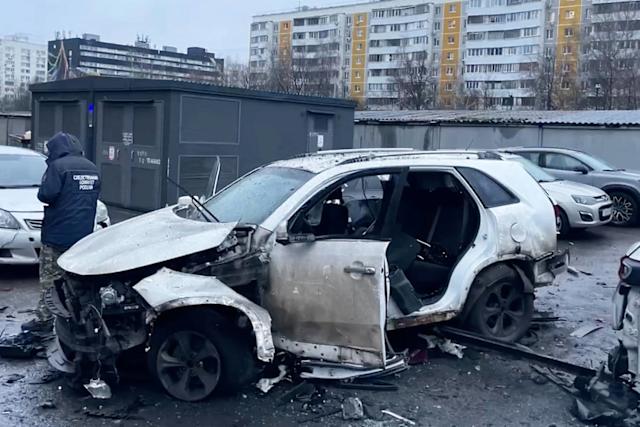
Investigators said the blast occurred at approximately 06:55 local time on Yaseneva Street in the Orekhovo-Borisovo district, a residential area in the south of the capital. Sarvarov was critically wounded in the explosion and later died in hospital, according to Russia’s Investigative Committee.
The Attack
Preliminary findings indicate that an improvised explosive device had been planted underneath Sarvarov’s vehicle, a Kia Sorento, and detonated as he began to drive away from a parking area. The force of the blast damaged at least seven nearby vehicles, underscoring the power of the device and raising concerns about public safety in densely populated areas of Moscow.
Emergency services arrived swiftly, and Sarvarov was transported to a medical facility with severe injuries. Despite efforts by doctors, he succumbed to his wounds shortly afterward, investigators said.
Authorities have opened a criminal case on charges of murder and illegal handling of explosives. The investigation remains ongoing, and officials have not yet announced any arrests.
Who Was Fanil Sarvarov?
Lieutenant General Fanil Sarvarov (1969–2025) served as the head of the Operational Training Directorate of the Russian General Staff, a key position responsible for combat readiness and planning within the armed forces.
Sarvarov’s military career spanned several decades. He took part in multiple conflicts involving Russian forces, including the Second Chechen War, the 2008 conflict in South Ossetia, operations in Syria, and later the ongoing war in Ukraine. Within military circles, he was regarded as a seasoned officer with extensive operational experience.
At the time of his death, Sarvarov was 56 years old.
Investigation and Possible Motives
Russian investigators are pursuing several lines of inquiry. One theory being examined is whether the attack was carried out by Ukrainian intelligence services or affiliated actors. While no official attribution has been made, Moscow has repeatedly accused Ukraine of orchestrating targeted killings of Russian military and security officials.
Ukraine has not claimed responsibility for the bombing, and Ukrainian officials have not publicly commented on Sarvarov’s death.
In previous cases, Russian authorities have alleged that such attacks are part of a broader campaign aimed at undermining Russia’s military leadership and spreading fear inside the country’s borders.
A Pattern of Targeted Killings
Sarvarov’s assassination fits a broader pattern of high-profile attacks against senior Russian military figures in and around Moscow over the past year.
In December 2024, Lieutenant General Igor Kirillov was killed when an explosive device hidden on an electric scooter detonated in Moscow. Ukrainian security services later claimed responsibility for that attack.
In April 2025, another senior officer, Lieutenant General Yaroslav Moskalik, was killed by a bomb planted in his car in Balashikha, a town just east of the Russian capital.
Sarvarov’s death is now considered the third killing of a high-ranking Russian military officer in a bombing in or near Moscow within a twelve-month period, highlighting what analysts describe as a significant escalation in covert operations linked to the conflict in Ukraine.
Political Reactions and Security Implications
Russian lawmakers and senior officials reacted swiftly, condemning the attack and vowing retaliatory measures. Several officials called for tighter security protocols for military and government personnel, particularly those involved in planning and operational roles.
State media commentators described the bombing as evidence that the war’s consequences are increasingly being felt inside Russia itself, far from the front lines.
Security analysts say the attack may prompt further restrictions, surveillance measures, and counterintelligence operations in Moscow and other major cities, as authorities seek to prevent similar incidents.